Numbers to Narratives: Inside the SE Michigan Cohort's Year 2 Convening in Detroit
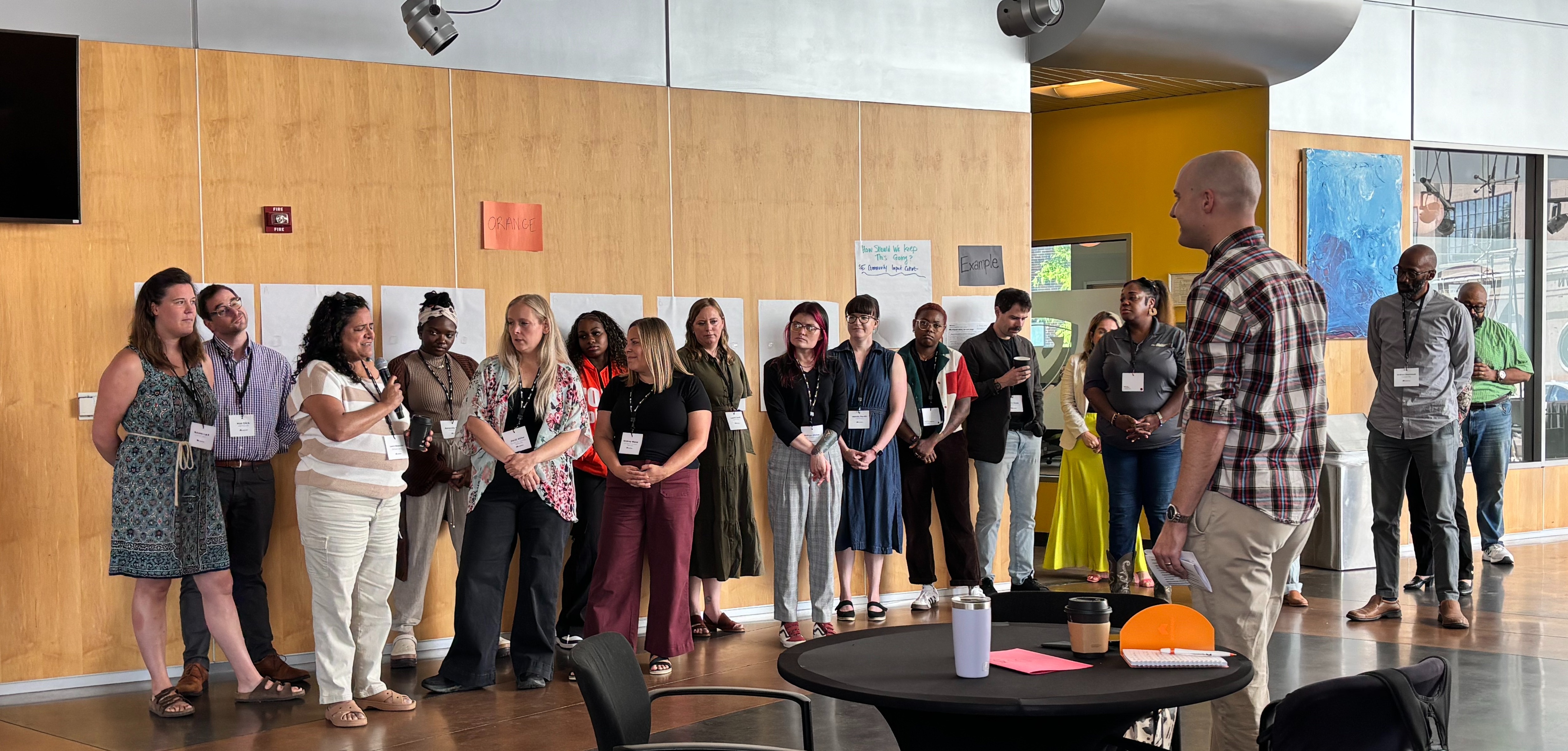
The day started with people on their feet. More than thirty nonprofit and community leaders from across Southeast Michigan had gathered at TechTown Detroit for the Year 2 in-person convening of the SE Michigan Community Impact Cohort, and the first real activity asked them to answer questions not by raising a hand, but by walking to a spot in the room.
One side meant teams were interested in using impact data mainly for external reporting and storytelling. The other meant internal learning and strategy. People moved to wherever they felt their organization currently sits on the continuum, then did it again for if their data currently centers on heart metrics (qualitative data) versus head metrics (quantitative data), and again for if their current goals are refining what they already have versus scaling into something new. The questions were designed to help people express their current data mindsets and operational realities, and watching the room sort itself gave a quick, honest picture of how differently each organization approaches the same work.
That was the point. The day was built to meet people where they actually were. The leaders in the room sit at different stages of data and storytelling maturity, and they arrived looking for different things from the session, exactly as the opening activity made visible. So this was not a session about being taught one right way. It was a working day, shaped around what the cohort said it wanted: more time to connect, collaborate, and work through real life questions and examples with peers.
Nobody is behind
The cohort is in the middle of a three-year journey. The first stretch focused on defining their impact strategies within an impact framework: who you serve, what you deliver, and what "better off" really means for the people in your programs. This year is about taking the next step - turning that data into something an audience can understand and act on.
The reassurance the facilitators kept returning to: every organization is in a different place, and none of them is behind. The goal of the day was never a finished dashboard. It was one real step from wherever you happen to be standing. Or, as the team put it more than once, data serves the mission, not the other way around.
The Data Walk: Feedback as a gift
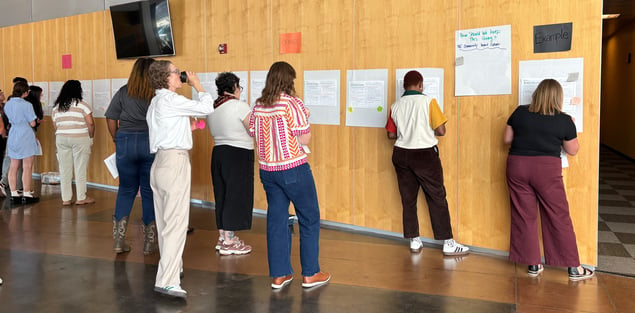
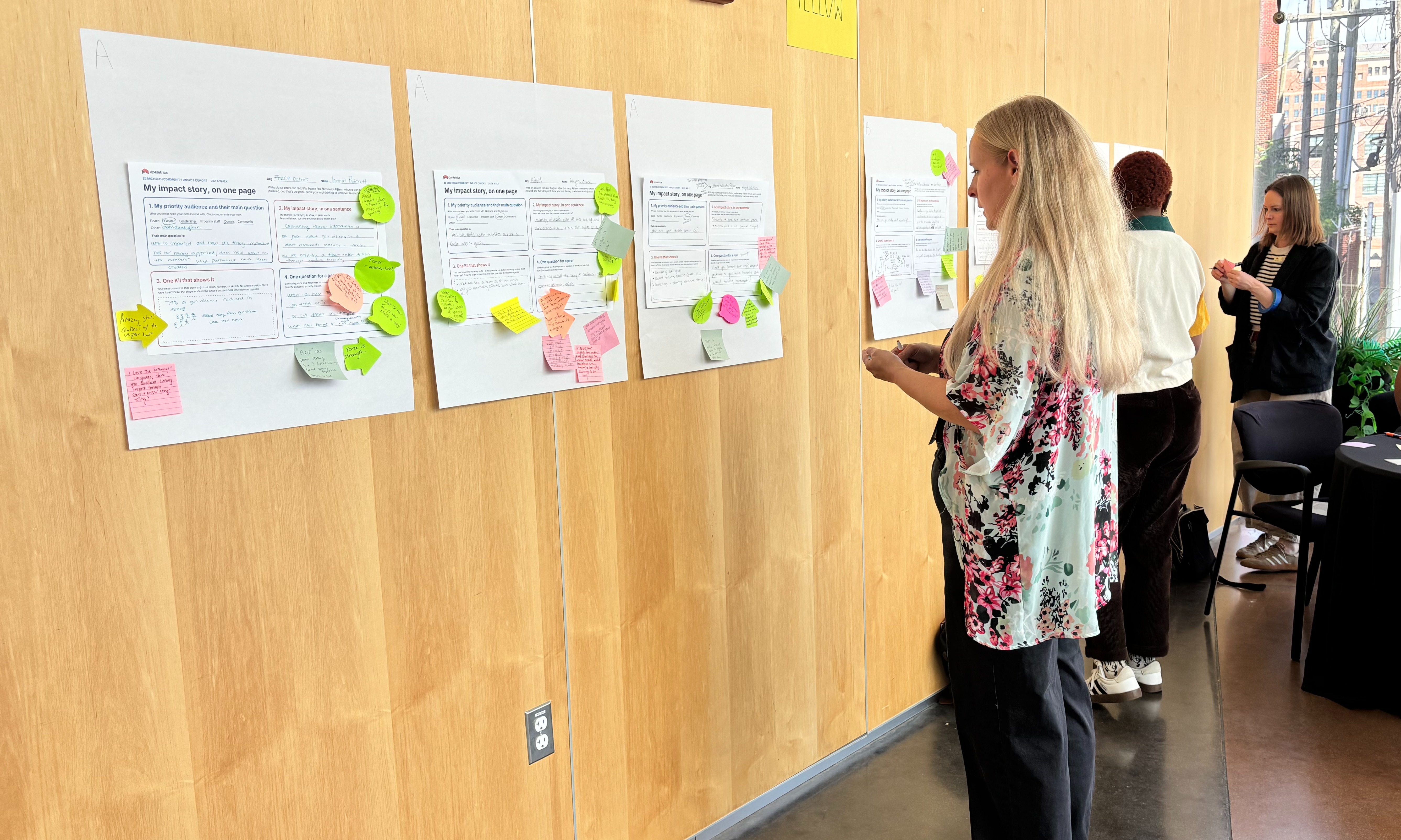
The morning centered on a "Data Walk" activity. Each leader filled out a single page: who they most need their data to reach, the one question that audience always asks, their impact story in a sentence, and one piece of evidence. A chart, a number, or even a rough sketch of what they wish they had.
Then the pages went up on the walls, and small groups walked the room like a gallery, leaving sticky-note feedback on each other's work.
The rule for that feedback was specific, and it is worth borrowing. Start with "I," not "you." "I notice." "I wonder." "In my work, I..." And there was one test for whether a note actually helped: could it only have been written about this sheet? If a note would fit on anyone's page, it is applause. If it clearly belongs to the work in front of you, it is feedback.
Insight Studio: Making a number mean more
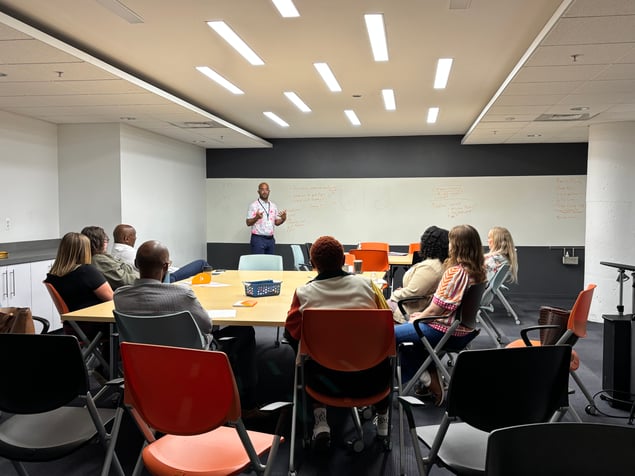
After lunch, the cohort split into small breakout groups for the heart of the day. Each room opened with a quick check-in: describe the weather on your impact story in a word or two. "Foggy, figuring it out." "Sunny with a chance of board meeting." "Storm clearing." From there, the session built on a single idea: a number on its own cannot be judged.
Think of a bare statistic as a photograph with no caption. People will write their own caption, and it is usually not the one you meant. The afternoon gave leaders two ways to write the caption themselves.
The first move is to sharpen, which means taking one number and showing a more specific view of it. "612 youth served" is true, but it is flat. "62% reached grade level, up from 28%, and the gap closed fastest for multilingual learners" tells you what actually changed, and for whom.
The second move is to frame, which means giving the audience the context they need to read the number correctly. "212 people housed" lands very differently as "212 housed, including someone who spent three years in shelters and is now twelve months into his own place." Same number. A completely different understanding.
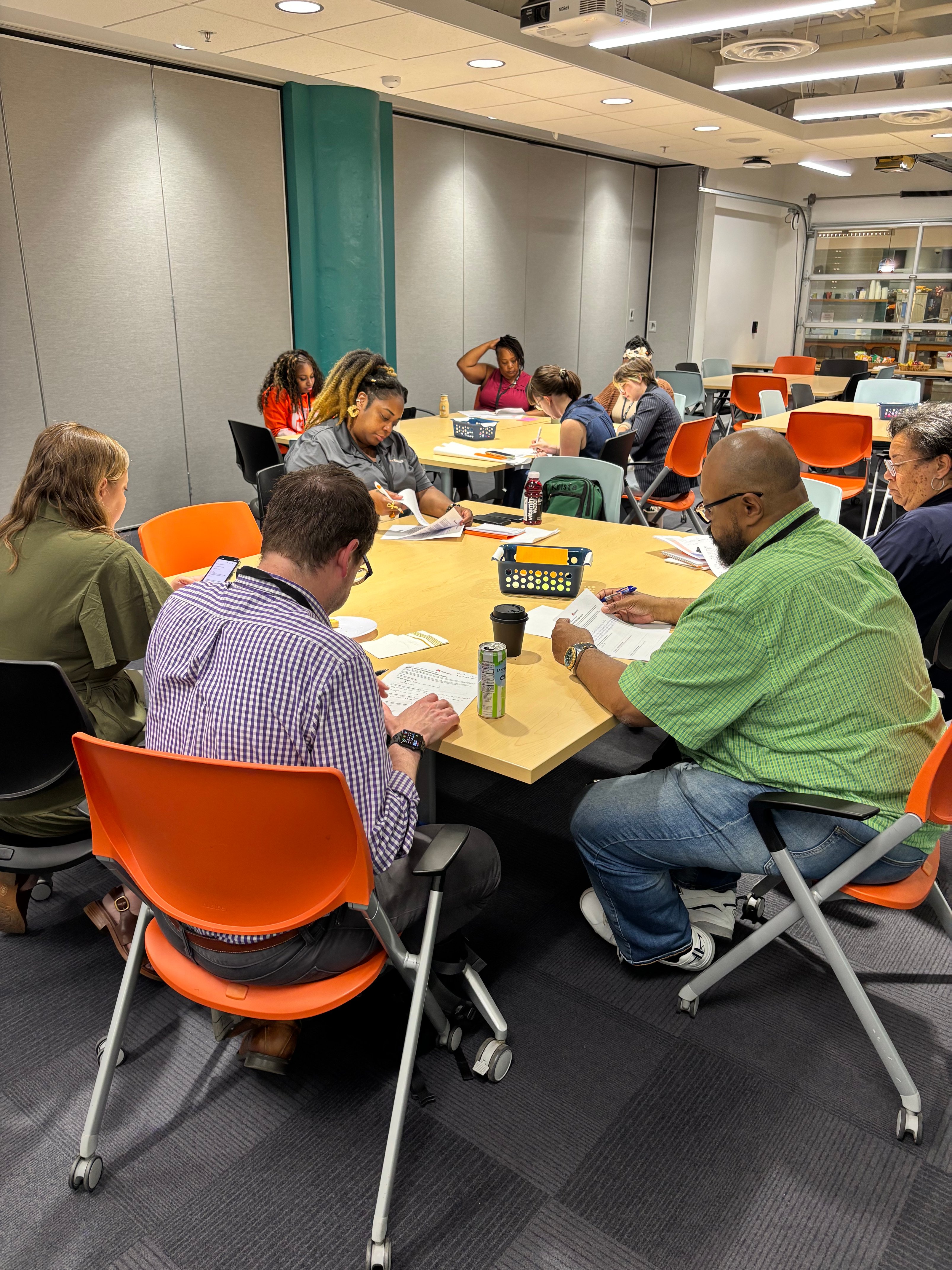
Leaders practiced both moves on a real number of their own, then coached each other in pairs. The point was getting in one rep, not mastering anything. The real work happens back home with their teams, and everyone kept their worksheet to run it again.
A candid conversation with a funder
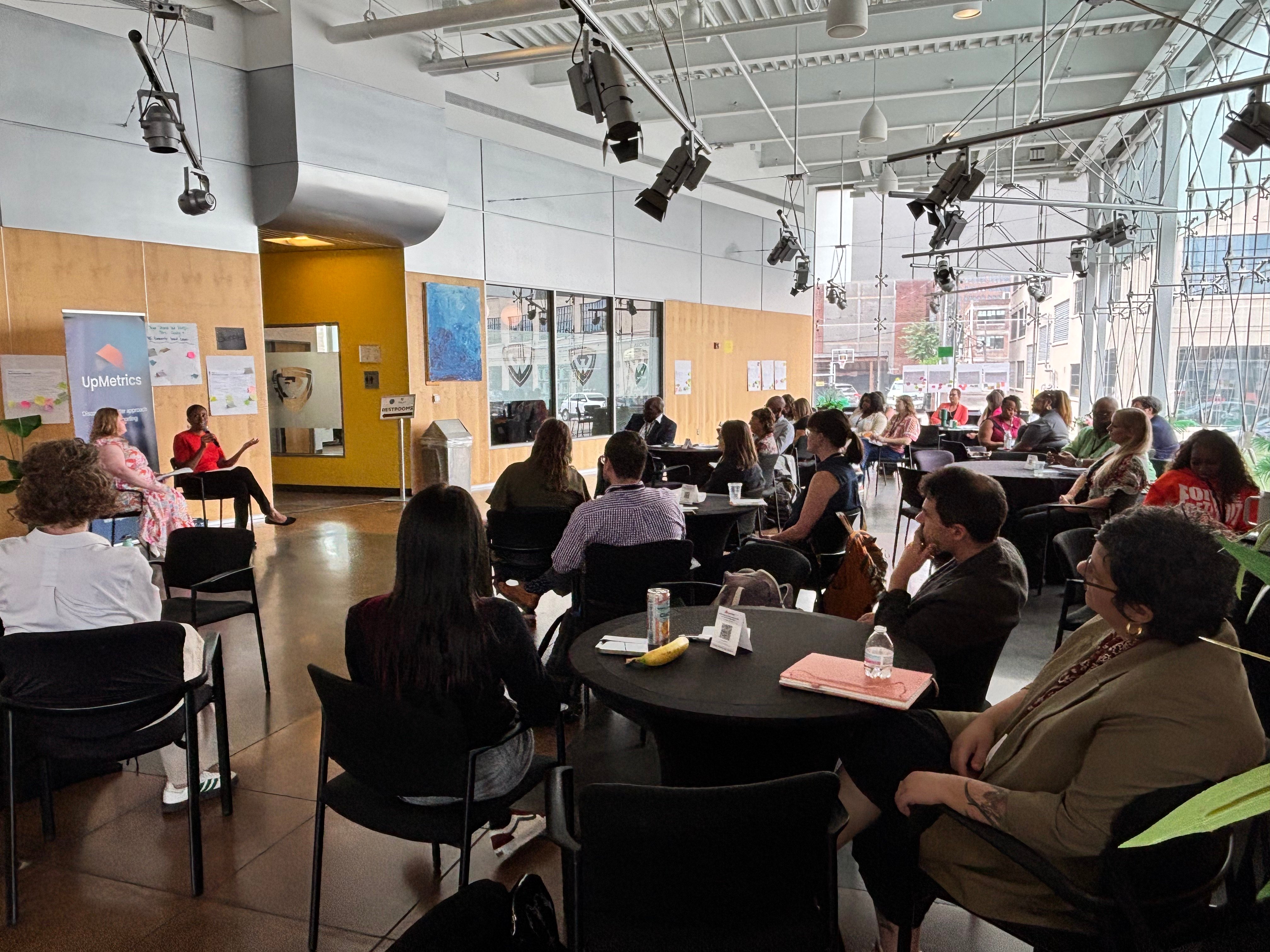
The afternoon closed with a fireside chat with Jessica Eiland Anders, Senior Portfolio Manager at Ballmer Group, who is the primary funder of the SE Michigan cohort. The session was built around questions the cohort had submitted anonymously throughout the day. The kind of questions people have always wanted to ask a funder, but rarely get the chance to.
The through-line was trust. Nonprofit leaders often feel pressure to tell only the success story. The message from the other side of the table was close to the opposite: a certain kind of honesty, naming what you are still learning and what the data does not yet show, tends to build confidence rather than erode it.
The momentum keeps going
The energy in that room doesn't end when the sticky notes come down. The peer coaching, the borrowed ideas, the questions still sitting with people: all of it will continue in the Cohort's various online sessions and in the UpMetrics Community, a new online portal where cohort members can continue to share resources, work through technical questions, and celebrate milestones together.
If your organization is trying to move from counting things to communicating what they mean, that is exactly the work this cohort is practicing. Learn more about it on our Cohorts web page.